Still more Roa Bastos...
The Body
"Usted mismo, Señor, dice que los hechos no son narrables" (568)
As much as this is a book about language or power, it is also a book about the limits of both, which it identifies at least in part with the materiality of the body. Indeed, even history, in so far as it is a narrative of or about power, finds its limit in the physicality (and corruptibility) of the matter that constitutes us. In fact, the book's broad narrative could perhaps be summarized in terms of an attempt to use language to stave off the bodily dissolution threatened by the anonymous decree, an attempt ultimately doomed to failure as the Supreme recognizes the futility of the struggle to impose narrative on events.
The main body of the book (and that the book also has a body is not insignificant) ends with a conflagration engulfing the Supreme's papers, and a vision of the dictator's body consumed by worms. We take, I think, this to be the conflagration that has partially destroyed the texts with which the compiler constructs the novel we have before us. That the compiler is continually forced to interpolate comments (more frequent in the final pages than hitherto) indicating the state of these texts (burnt, illegible, missing) reminds us that language has to be incarnated in some physical medium for it to be transmitted. We are constantly reminded that literature has a real (not simply an ideal) presence, that the letter is also material, and so subject to the vicissitudes that may befall all material things. At the same time, the partial survival of the Supreme's papers point to another, contrasting aspect to the letter's materiality: the fact that the dictator is unable fully to destroy his papers demonstrates that once committed to paper his thoughts have a stubborn presence that cannot easily be revoked. In short, the paradox of materiality is that it is both obstinately resistant to change and yet also always mutable, never self-similar.
Likewise, then, the Supreme's predicament might be described as a combination of the fact that his written or spoken dictates are insufficiently powerful to provide him with absolute power over the Paraguayan social body, yet his words will inevitably prove more durable than his own decaying flesh. On the one hand, his power is not powerful enough; on the other, his power far outstrips his own body.
Traditionally, one way in which to conceptualize this second dislocation between the mortality of those who wield power and the presumed eternity of power itself revolves around the concept of the "king's two bodies." As a subject of power, the king's body is incorruptible and immortal, transcending any particular individual (hence the instantaneousness of transition articulated in the declaration "The king is dead, long live the king!"); as a human subject, however, it is recognized that the king's body may suffer illness and decrepitude. The separation between "yo" and "él" that we see in Roa Bastos's novel expresses therefore not only a linguistic complexity, but also a material doubling. Yet even in this neat solution to the question of power's materiality, problems arise in the intricate relation between these two bodies. What happens, for instance, when the king seems to go mad (as with George III)? And, more fundamentally, rather than preserving an ideal, untouchable body is not this doubling itself a form of monstrosity?
As an attempt to resolve these contradictions, the Supreme's discourse therefore attempts a constant dialogue between language itself and materiality. Yet this is always inevitably a failed dialogue, as there can be no dialogue between language and what is not language; by definition a dialogue can only be established within language. The material will always remain forever mute and (at least in part) unknowable.
Showing posts with label roa bastos. Show all posts
Showing posts with label roa bastos. Show all posts
Monday, March 03, 2008

Sunday, March 02, 2008
perpetual
More on Roa Bastos's Yo el supremo...
History
"En cuanto a mí veo ya el pasado confundido con el futuro" (369)
I the Supreme is a historical novel in more than one sense of this phrase. In the first place, it is a novel set in the past: Roa Bastos has chosen to write about a figure who had been dead over a century by the time of the book's publication. In this sense (and not unlike even the "pulp fiction" of, say, a Catherine Cookson) the novel functions to animate or dramatise--bring to life or "make real"--a period with which its readers will have no direct experience. Historical fiction works (and finds much of its justification) because of the way in which the license allowed to the novelist enables him or her to fill in the gaps left the historical record, to give us some imagined sense of what it must have been like to live in a particular epoch or now past period by giving us the emotions, voices (often interior or psychological) voices and motivations that have not survived in the archive of historical documentation. Here, the historical novel points to and makes use of the deficiencies of other forms of history.
Second, however, this novel also quotes and uses these same historical sources; it is not merely set in the past, it also provides us with excerpts from many of the kinds of documents that professional historians also use to shed light on the actual events and figures that it also treats fictionally. Often therefore we are presented both with a fictionalized version of situations or happenings and (by means of the footnotes, a device more usually found in texts that are thought to be factual) also a version of those same situations as they have been recorded in documents, letters, and publications of the nineteenth century. On several occasions these different accounts seem to contradict each other: to be more precise, the "compiler" presents the historical record as a correction to the account that is presented in the voice of the Supreme. Here, the novel would seem to be pointing to the deficiencies of either memory (if we take the Supreme's narrative at face value as a remembrance of incidents in which he has played a part) or fiction itself.
Third, then, this is also a novel that thematizes history as one of its key concerns. This thematization takes place on a number of levels, one of which involves the way in which the Supreme (above all in his "perpetual circular," an ascription that also has something to say about the writing of history) narrates the historical foundation of the Paraguayan republic, and his role in the construction of the nation, in part to justify and legitimate his own hold on power in the (novel's) present. At the same time, prompted by the reminder of his mortality that opens the story (the "historia" in Spanish), the Supreme is also concerned to establish a sense of his legacy to the country. Hence there is a concern with history as it is written (and as it is therefore perpetuated), as opposed to history as it is (mis)remembered in an oral tradition. The novel thus repeats (or mirrors) on another level some of the concerns that we have also seen shared by the compiler, that is, the difference between memory (or myth) and written, documented, history.
Finally (though there is as always much more that could be said), the novel is historical in the sense that it was written at a particular historical conjuncture (now over thirty years past), that is, the epoch in which dictatorial or military regimes ruled in many Latin American countries, not least Paraguay (under Stroessner), and at a point when Argentina (where the book was written) was also about to be subject to the military coup of 1976. We can therefore read the book in the light of the historical context of its production--as well as the context of a literary history for which, some argue, this is the last great modernist novel of world literature (or the first great postmodernist novel of Latin American literature).
History
"En cuanto a mí veo ya el pasado confundido con el futuro" (369)
I the Supreme is a historical novel in more than one sense of this phrase. In the first place, it is a novel set in the past: Roa Bastos has chosen to write about a figure who had been dead over a century by the time of the book's publication. In this sense (and not unlike even the "pulp fiction" of, say, a Catherine Cookson) the novel functions to animate or dramatise--bring to life or "make real"--a period with which its readers will have no direct experience. Historical fiction works (and finds much of its justification) because of the way in which the license allowed to the novelist enables him or her to fill in the gaps left the historical record, to give us some imagined sense of what it must have been like to live in a particular epoch or now past period by giving us the emotions, voices (often interior or psychological) voices and motivations that have not survived in the archive of historical documentation. Here, the historical novel points to and makes use of the deficiencies of other forms of history.
Second, however, this novel also quotes and uses these same historical sources; it is not merely set in the past, it also provides us with excerpts from many of the kinds of documents that professional historians also use to shed light on the actual events and figures that it also treats fictionally. Often therefore we are presented both with a fictionalized version of situations or happenings and (by means of the footnotes, a device more usually found in texts that are thought to be factual) also a version of those same situations as they have been recorded in documents, letters, and publications of the nineteenth century. On several occasions these different accounts seem to contradict each other: to be more precise, the "compiler" presents the historical record as a correction to the account that is presented in the voice of the Supreme. Here, the novel would seem to be pointing to the deficiencies of either memory (if we take the Supreme's narrative at face value as a remembrance of incidents in which he has played a part) or fiction itself.
Third, then, this is also a novel that thematizes history as one of its key concerns. This thematization takes place on a number of levels, one of which involves the way in which the Supreme (above all in his "perpetual circular," an ascription that also has something to say about the writing of history) narrates the historical foundation of the Paraguayan republic, and his role in the construction of the nation, in part to justify and legitimate his own hold on power in the (novel's) present. At the same time, prompted by the reminder of his mortality that opens the story (the "historia" in Spanish), the Supreme is also concerned to establish a sense of his legacy to the country. Hence there is a concern with history as it is written (and as it is therefore perpetuated), as opposed to history as it is (mis)remembered in an oral tradition. The novel thus repeats (or mirrors) on another level some of the concerns that we have also seen shared by the compiler, that is, the difference between memory (or myth) and written, documented, history.
Finally (though there is as always much more that could be said), the novel is historical in the sense that it was written at a particular historical conjuncture (now over thirty years past), that is, the epoch in which dictatorial or military regimes ruled in many Latin American countries, not least Paraguay (under Stroessner), and at a point when Argentina (where the book was written) was also about to be subject to the military coup of 1976. We can therefore read the book in the light of the historical context of its production--as well as the context of a literary history for which, some argue, this is the last great modernist novel of world literature (or the first great postmodernist novel of Latin American literature).
Wednesday, February 27, 2008
supreme
Some old notes on Augusto Roa Bastos's Yo el supremo, which follow on from a previous post on dictation, which dealt with language in the novel:
Power
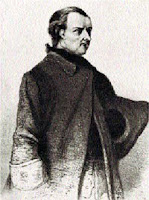 "Here the generality of the people is embodied in the State. Here I can affirm with perfect reason: I-am-the-State, since the people have made me their supreme potestate" (166)
In the first and last instance, I the Supreme is a novel about power. As we have seen, the title itself is a declaration of power and authority: power is here made to speak, performatively. The first person declares himself to be first among the equals that constitute the republic in a relation of apposition that is to go without saying, for "I, the Supreme" presupposes the initial foundation "I am the Supreme." This foundation is to be taken for granted; the Supreme insists that he (and only he) has the right to speak as supreme authority. He is the state.
But as we have seen, the novel also revolves around the fact that the parody found pinned to the cathedral door threatens to undermine this assumption of supreme power. It would seem that somebody is attempting to usurp the Supreme's right to absolute authority by forging his authorship of state decrees. Hence the book threatens to undo the assumption contained within its title, and the Supreme finds himself forced to justify and so (re)legitimate his place as head of state. The novel unfolds as an anatomy not only of power but also of (potential) counter-powers.
The dictator reasserts his right to supreme authority not only through repression but also by narratively re-enacting the history of the state's coming into being, its struggle for independence first from Spanish rule and second from the threat posed by the neighboring states of Argentina and Brazil. Thus the Supreme re-tells the story not only of the battles but also (more importantly from his standpoint) of the negotiations in which he played a key part in maintaining Paraguay's autonomy as the various parts of what was previously the Spanish Empire reconstituted themselves as sovereign nations. The establishment of Paraguayan sovereignty is represented as a process that is both material and discursive, a question of force and persuasion. Even the most absolute of dictatorial powers feels the need for discursive legitimation.
We should note particularly that the discourse to which the dictator has recourse establishes Paraguay as a distinctively modern state, and thus the Supreme's power as a specifically modern power, in so far as his narrative is one that invokes the people as the source of legitimate power. Rather than the divine right that was invoked to justify monarchical power, the Supreme appeals to the notion of a social contract as elaborated by the French philosopher Jean-Jacques Rousseau. Indeed, he signals that he is more modern than the Argentina delegation who come to Asunción with their talk of power politics and pragmatics. He is frustrated that there is not more opportunity to talk further about the principles of political philosophy and their adaptability to the nascent American republics: "I would have liked to discuss at that moment the principles of the Social Contract as applied to our countries" (205). Paraguay was, after all, the first Latin American republic, and the Supreme's concern is in part how to found this new type of regime from the ashes of a discredited Empire.
Rousseau's notion of the Social Contract is an attempt to legitimate the State through reason and consent, rather than tradition (or theology). A newly independent Paraguay has no republican tradition on which it can draw (and has turned its back on the church). All that remains is reason, and it is important to recognize therefore that the Supreme is a profoundly rational man in so far as his power is founded upon reason's dictates. This is so even as and when we see his reason dissolving or becoming unreasonable. We should still see that his attempts to consolidate his power have also to be presented at attempts to ward off the irrational. And after all, in so far as his power is undercut, it is never by reasoned argument, but rather by parody, multiplicity, or material decay (of either his body or his text).
What we have, therefore, is a hyper-politicized version of Borges's concern with the limits of reason. In the person of the Supreme, the Borgesian preoccupation with reason and order is immediately also a concern with the legitimation of the social. The crisis that afflicts the dictator (and if this is a novel about power, it is also a novel about power in crisis) concerns the extent to which not only his will but also rationality itself can be imposed upon a recalcitrant world. There is an echo of Hamlet, here quoted in the dictator's conversation with the Robertsons--"There's a Divinity that shapes our ends, / Rough-hew them how we will!" (129). The Supreme's wager is that he can invoke a republican power that supersedes the things of heaven and earth: "I am the final judge. I can decide how things will go. Contrive the facts. Invent the events" (196).
In a sense, then, dictatorship is presented not so much as the power of the individual counterposed against that of the people, for the people, the State, and the individual are a single entity incarnated in the body of the people's supreme representative; rather dictatorship here involves the attempt to assert the power of reason over that of history.
Power
 "Here the generality of the people is embodied in the State. Here I can affirm with perfect reason: I-am-the-State, since the people have made me their supreme potestate" (166)
In the first and last instance, I the Supreme is a novel about power. As we have seen, the title itself is a declaration of power and authority: power is here made to speak, performatively. The first person declares himself to be first among the equals that constitute the republic in a relation of apposition that is to go without saying, for "I, the Supreme" presupposes the initial foundation "I am the Supreme." This foundation is to be taken for granted; the Supreme insists that he (and only he) has the right to speak as supreme authority. He is the state.
But as we have seen, the novel also revolves around the fact that the parody found pinned to the cathedral door threatens to undermine this assumption of supreme power. It would seem that somebody is attempting to usurp the Supreme's right to absolute authority by forging his authorship of state decrees. Hence the book threatens to undo the assumption contained within its title, and the Supreme finds himself forced to justify and so (re)legitimate his place as head of state. The novel unfolds as an anatomy not only of power but also of (potential) counter-powers.
The dictator reasserts his right to supreme authority not only through repression but also by narratively re-enacting the history of the state's coming into being, its struggle for independence first from Spanish rule and second from the threat posed by the neighboring states of Argentina and Brazil. Thus the Supreme re-tells the story not only of the battles but also (more importantly from his standpoint) of the negotiations in which he played a key part in maintaining Paraguay's autonomy as the various parts of what was previously the Spanish Empire reconstituted themselves as sovereign nations. The establishment of Paraguayan sovereignty is represented as a process that is both material and discursive, a question of force and persuasion. Even the most absolute of dictatorial powers feels the need for discursive legitimation.
We should note particularly that the discourse to which the dictator has recourse establishes Paraguay as a distinctively modern state, and thus the Supreme's power as a specifically modern power, in so far as his narrative is one that invokes the people as the source of legitimate power. Rather than the divine right that was invoked to justify monarchical power, the Supreme appeals to the notion of a social contract as elaborated by the French philosopher Jean-Jacques Rousseau. Indeed, he signals that he is more modern than the Argentina delegation who come to Asunción with their talk of power politics and pragmatics. He is frustrated that there is not more opportunity to talk further about the principles of political philosophy and their adaptability to the nascent American republics: "I would have liked to discuss at that moment the principles of the Social Contract as applied to our countries" (205). Paraguay was, after all, the first Latin American republic, and the Supreme's concern is in part how to found this new type of regime from the ashes of a discredited Empire.
Rousseau's notion of the Social Contract is an attempt to legitimate the State through reason and consent, rather than tradition (or theology). A newly independent Paraguay has no republican tradition on which it can draw (and has turned its back on the church). All that remains is reason, and it is important to recognize therefore that the Supreme is a profoundly rational man in so far as his power is founded upon reason's dictates. This is so even as and when we see his reason dissolving or becoming unreasonable. We should still see that his attempts to consolidate his power have also to be presented at attempts to ward off the irrational. And after all, in so far as his power is undercut, it is never by reasoned argument, but rather by parody, multiplicity, or material decay (of either his body or his text).
What we have, therefore, is a hyper-politicized version of Borges's concern with the limits of reason. In the person of the Supreme, the Borgesian preoccupation with reason and order is immediately also a concern with the legitimation of the social. The crisis that afflicts the dictator (and if this is a novel about power, it is also a novel about power in crisis) concerns the extent to which not only his will but also rationality itself can be imposed upon a recalcitrant world. There is an echo of Hamlet, here quoted in the dictator's conversation with the Robertsons--"There's a Divinity that shapes our ends, / Rough-hew them how we will!" (129). The Supreme's wager is that he can invoke a republican power that supersedes the things of heaven and earth: "I am the final judge. I can decide how things will go. Contrive the facts. Invent the events" (196).
In a sense, then, dictatorship is presented not so much as the power of the individual counterposed against that of the people, for the people, the State, and the individual are a single entity incarnated in the body of the people's supreme representative; rather dictatorship here involves the attempt to assert the power of reason over that of history.
Friday, August 19, 2005
dictation
Over at Waggish, in an entry mostly on Bolaño, it is suggested that "As English, French, and West German writers seem often to have dealt with this theme [of literature's complicity in mortal crimes and political horrors] from too theoretical a standpoint (see Coetzee, Blanchot, Grass, etc.), the visceral approach of Latin American writers like Bolano and Augusto Roa Bastos makes a necessary counterweight."
Something's up with the commenting system at Waggish, so consider this a displaced comment: I'm not convinced by the notion that Bolaño and Roa Bastos, or indeed "Latin American writers" in general, are more "visceral" than other authors. (NB there is something at best quaint about describing Coetzee as English and Grass as West German.) As well as suffering all the usual weaknesses of such sweeping comments, and as well as buying in to the traditional neo-colonial ideology that allocates theory to the metropolis and corporeality to the periphery, the choice of Roa Bastos as an example is simply bizarre.
Roa Bastos's masterpiece Yo, el supremo is many things, among them probably the greatest novel written in twentieth-century Latin America. But to imply it is untheoretical is nonsense. And to label it "visceral" is, well, at best misleading.
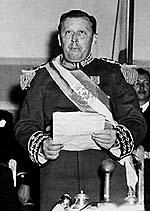 The novel opens with the declaration that also serves as the book's title: "Yo el supremo Dictador de la Republica" (7). This sentence would appear to be the first line of an official declaration, marked by its performative invocation of authority. "Yo el supremo" refers to the ultimate power in Paraguay, José Gaspar Rodríguez Francia, and the phrase apparently initiates another of his dictates to the Paraguayan people.
It soon becomes evident, however, that authority and authorship are here more muddled and uncertain than first appearances suggest. For the declaration is fake--a subversive parody--pinned by unknown hands on Asunción's cathedral door. Who then is this "yo," this "I" who would be "supreme"? There is a double reference here: the text purports to have been written (or to have been dictated) by Francia, but Francia himself (and his secretary, Policarpo Patiño) are determined to discover the missive's true author. Someone, it seems, is determined to usurp the language that only the dictator himself may use, and so to infiltrate the place of power itself: "Remedan mi lenguaje, mi letra, buscando infiltrarse a través de él; llegar hasta mí desde sus madrigueras" (9).
Underlying Francia's anxiety is the assumption that a dictator's power is founded on language, on the ability to sign and give orders. It is after all language that enables the systematization of power, in the form of decrees, laws, and communiqués. "El Supremo Dictador habla siempre a los demás. Dirige su voz delante de sí para ser oído, escuchado, obedecido" (28). The novel analyses this process of dictation in its two senses of absolute power and inscription of the voice. Francia endlessly speaks, while Patiño listens, obeys, writes, and transmits the dictator's pronouncements.
Language enables power to be communicated and distributed, to become absolute throughout the territory. Language is social ("el sonido del pensamiento [...] nunca es un murmullo solitario por más íntimo que sea" [28]) and enables its dictator to manage the social.
Yet language's distributive powers are double-edged. Its transferability and communicability open up a gap between the subject and what that subject enunciates, or between the person and the grammatical subject ("yo"). As Francia notes, "Lo que significa es que en el Supremo por lo menos hay dos" (28). And in this division, in this doubling, availing themselves of the shifting quality of personal pronouns, other persons can present themselves as the "first" person. They can position themselves in the space of the grammatical subject. In the end, what is to stop anyone from declaring (in imitation, by repetition) "Yo [también], el supremo," I too am supreme, so mocking sovereignty's claim to uniqueness?
Something's up with the commenting system at Waggish, so consider this a displaced comment: I'm not convinced by the notion that Bolaño and Roa Bastos, or indeed "Latin American writers" in general, are more "visceral" than other authors. (NB there is something at best quaint about describing Coetzee as English and Grass as West German.) As well as suffering all the usual weaknesses of such sweeping comments, and as well as buying in to the traditional neo-colonial ideology that allocates theory to the metropolis and corporeality to the periphery, the choice of Roa Bastos as an example is simply bizarre.
Roa Bastos's masterpiece Yo, el supremo is many things, among them probably the greatest novel written in twentieth-century Latin America. But to imply it is untheoretical is nonsense. And to label it "visceral" is, well, at best misleading.
 The novel opens with the declaration that also serves as the book's title: "Yo el supremo Dictador de la Republica" (7). This sentence would appear to be the first line of an official declaration, marked by its performative invocation of authority. "Yo el supremo" refers to the ultimate power in Paraguay, José Gaspar Rodríguez Francia, and the phrase apparently initiates another of his dictates to the Paraguayan people.
 It soon becomes evident, however, that authority and authorship are here more muddled and uncertain than first appearances suggest. For the declaration is fake--a subversive parody--pinned by unknown hands on Asunción's cathedral door. Who then is this "yo," this "I" who would be "supreme"? There is a double reference here: the text purports to have been written (or to have been dictated) by Francia, but Francia himself (and his secretary, Policarpo Patiño) are determined to discover the missive's true author. Someone, it seems, is determined to usurp the language that only the dictator himself may use, and so to infiltrate the place of power itself: "Remedan mi lenguaje, mi letra, buscando infiltrarse a través de él; llegar hasta mí desde sus madrigueras" (9).
Underlying Francia's anxiety is the assumption that a dictator's power is founded on language, on the ability to sign and give orders. It is after all language that enables the systematization of power, in the form of decrees, laws, and communiqués. "El Supremo Dictador habla siempre a los demás. Dirige su voz delante de sí para ser oído, escuchado, obedecido" (28). The novel analyses this process of dictation in its two senses of absolute power and inscription of the voice. Francia endlessly speaks, while Patiño listens, obeys, writes, and transmits the dictator's pronouncements.
Language enables power to be communicated and distributed, to become absolute throughout the territory. Language is social ("el sonido del pensamiento [...] nunca es un murmullo solitario por más íntimo que sea" [28]) and enables its dictator to manage the social.
Yet language's distributive powers are double-edged. Its transferability and communicability open up a gap between the subject and what that subject enunciates, or between the person and the grammatical subject ("yo"). As Francia notes, "Lo que significa es que en el Supremo por lo menos hay dos" (28). And in this division, in this doubling, availing themselves of the shifting quality of personal pronouns, other persons can present themselves as the "first" person. They can position themselves in the space of the grammatical subject. In the end, what is to stop anyone from declaring (in imitation, by repetition) "Yo [también], el supremo," I too am supreme, so mocking sovereignty's claim to uniqueness?
Subscribe to:
Posts (Atom)